Table of Contents
Inside Joe Klecker's NYC Marathon Build
What Changed in a Year on the Same Course
Four 25-mile long runs. Marathon-specific workouts. A faster finish on the streets of New York.
One year after his marathon debut at the 2025 New York City Marathon, Joe Klecker returned to the same course with more experience, deeper endurance and a sharper approach to racing.
After running 2:05:56 at the 2026 Boston Marathon, Klecker focused on building the endurance to race hard for 26.2 miles while keeping the speed that defined his track career.
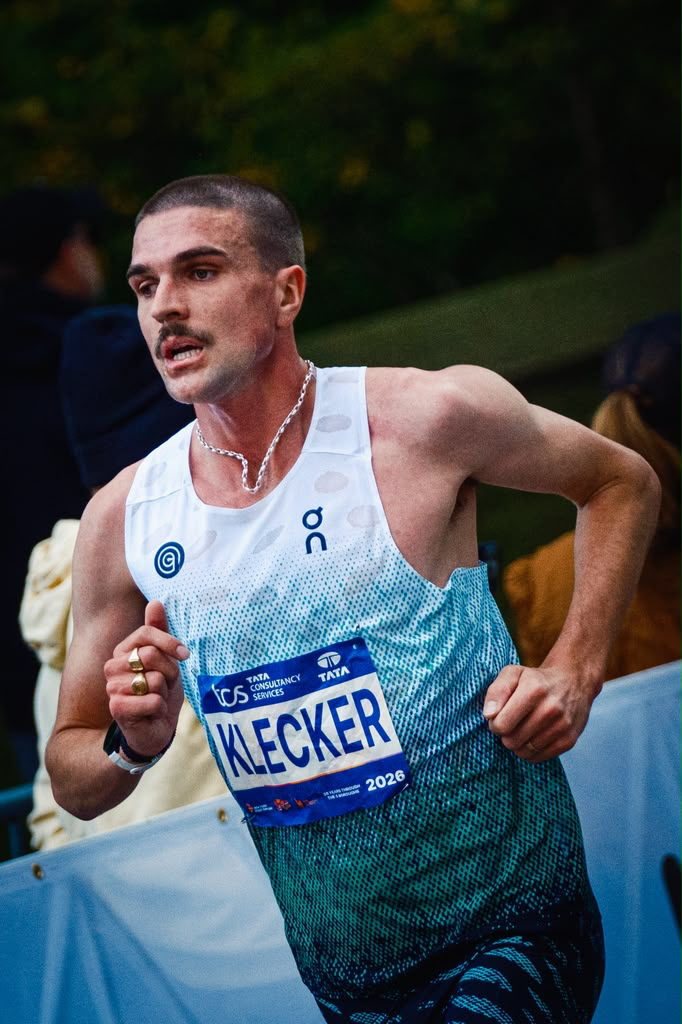
On November 1, he finished the 2026 New York City Marathon in 2:09:28, placing 15th overall and taking 1 minute and 9 seconds off his previous time on the course.
Through his partnership with Suunto, Klecker shared the training data behind his build, offering a closer look at his development as a marathoner.
From Track Speed to Marathon Strength
For most of his career, Klecker raced the 5,000m and 10,000m on the track, building the speed to compete at the highest level.
The marathon asked for something different.
Instead of leaning on fast workouts alone, Klecker shifted his emphasis toward the aerobic strength needed to hold his pace for more than two hours of racing. His training now blends short track intervals, longer repetitions and demanding marathon-specific sessions.
The goal goes beyond getting faster. It's about keeping his speed and building the endurance to use it over 26.2 miles.
Three Key Workouts: Building Marathon-Specific Fitness
Workout 1 — 20 × 400m: Maintaining Track Speed
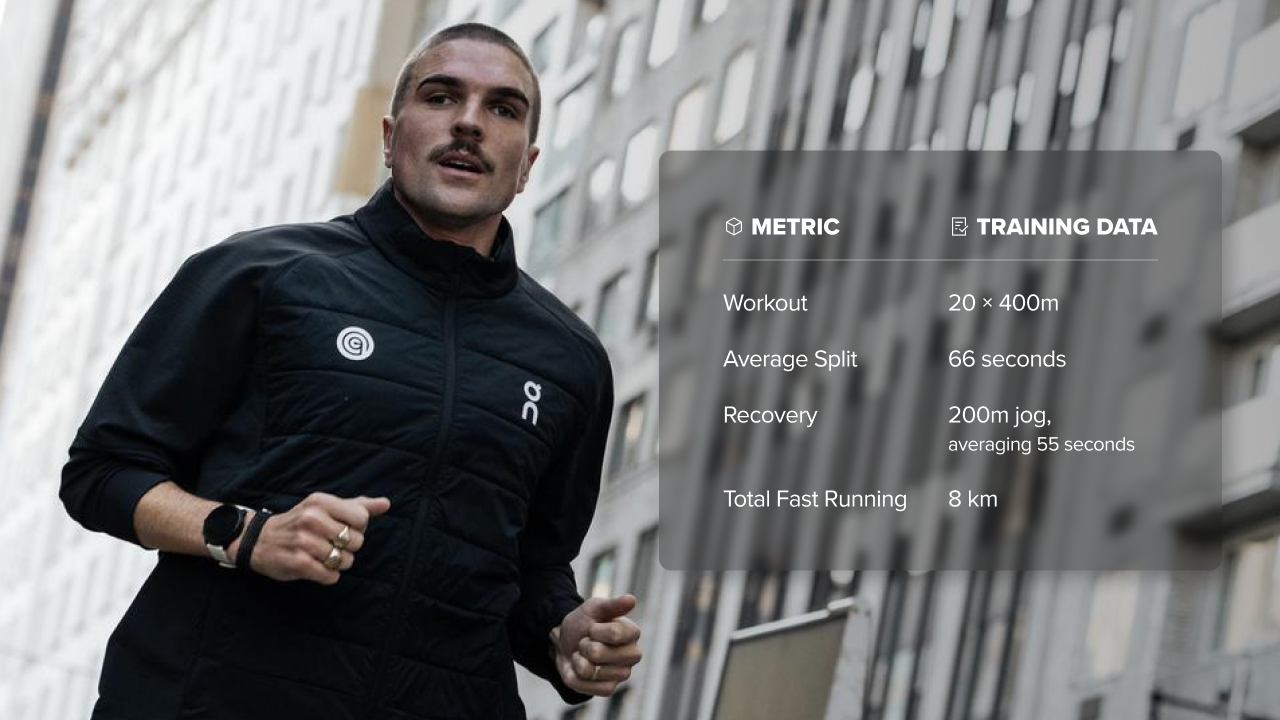
Eight weeks out from New York, Klecker ran 20 × 400m on the track with 200m jog recoveries.
| Metric | Training Data |
|---|---|
| Workout | 20 × 400m |
| Average Split | 66 seconds |
| Recovery | 200m jog, averaging 55 seconds |
| Total Fast Running | 8 km |
The marathon is now his focus, but speed remains a key part of his preparation. His coach, Dathan Ritzenhein, keeps VO₂ max sessions in the program to preserve the speed Klecker built on the track.
Workout 2 — 4 × 5K: Changing Race Intensities
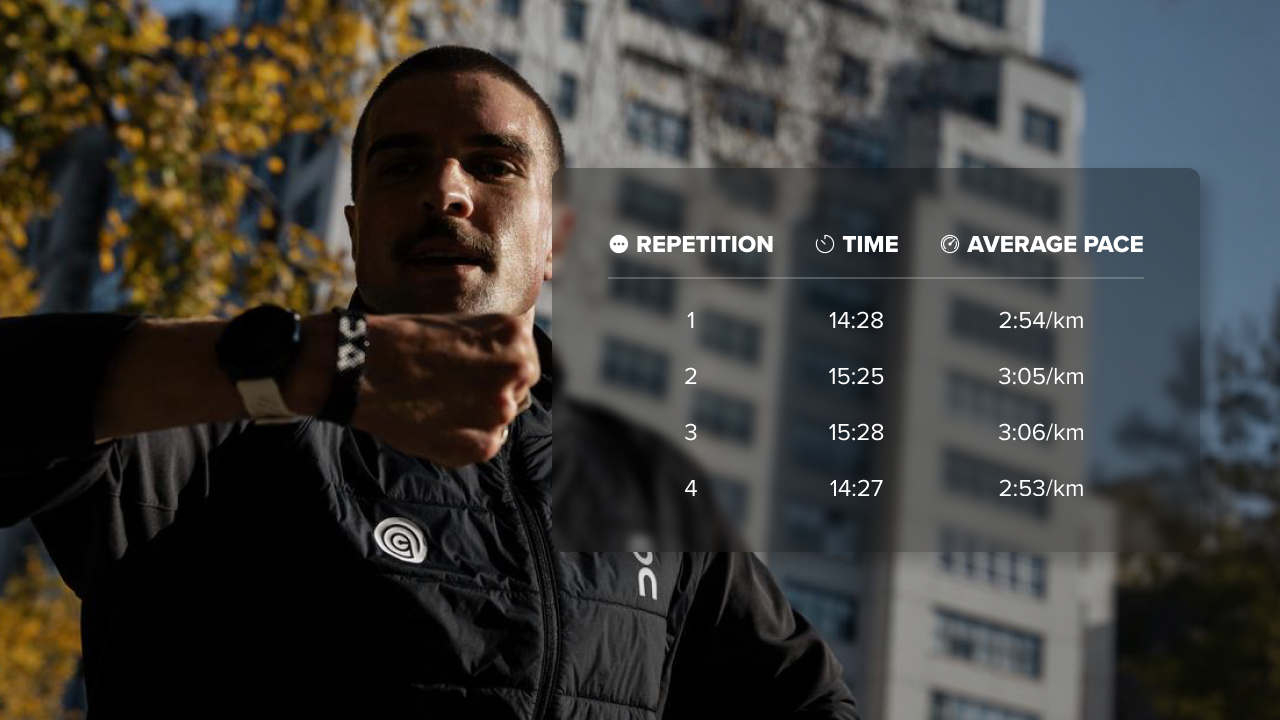
Ten weeks out, Klecker ran four 5K repetitions with three minutes of recovery. The session alternated between half-marathon and marathon intensity.
| Repetition | Time | Average Pace |
|---|---|---|
| 1 | 14:28 | 2:54/km |
| 2 | 15:25 | 3:05/km |
| 3 | 15:28 | 3:06/km |
| 4 | 14:27 | 2:53/km |
After 15 kilometers of hard running, he closed with his fastest rep of the day. His final 5K took 14:27, one second quicker than his opening effort.
The session showed his ability to switch gears while holding a strong overall effort.
Workout 3 — 2 × 6 Miles: Best Week Yet
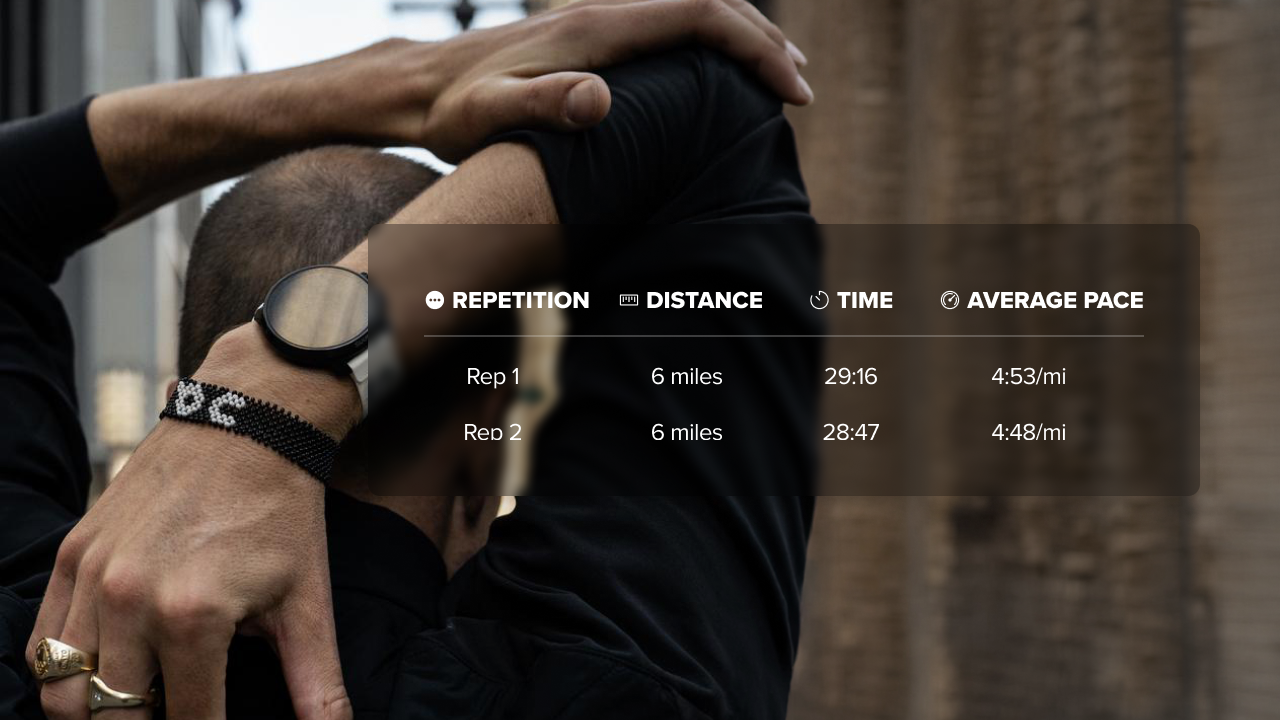
Five weeks before New York, Klecker completed one of his most impressive marathon-specific sessions.
| Repetition | Distance | Time | Average Pace |
|---|---|---|---|
| Rep 1 | 6 miles | 29:16 | 4:53/mi |
| Rep 2 | 6 miles | 28:47 | 4:48/mi |
The second rep built in deliberate changes of pace.
He opened with a 4:25 mile, settled into four miles at around 4:58/mi, then closed with a 4:24 final mile.
What mattered most was how the session felt. A year earlier, Klecker said, closing a workout like this at that pace would have taken a near-maximal effort.
This time, it felt controlled, a clear sign of his improved marathon-specific fitness. The lesson: Sometimes progress means making fast running feel easier.
Four 25-Mile Long Runs: Building Endurance
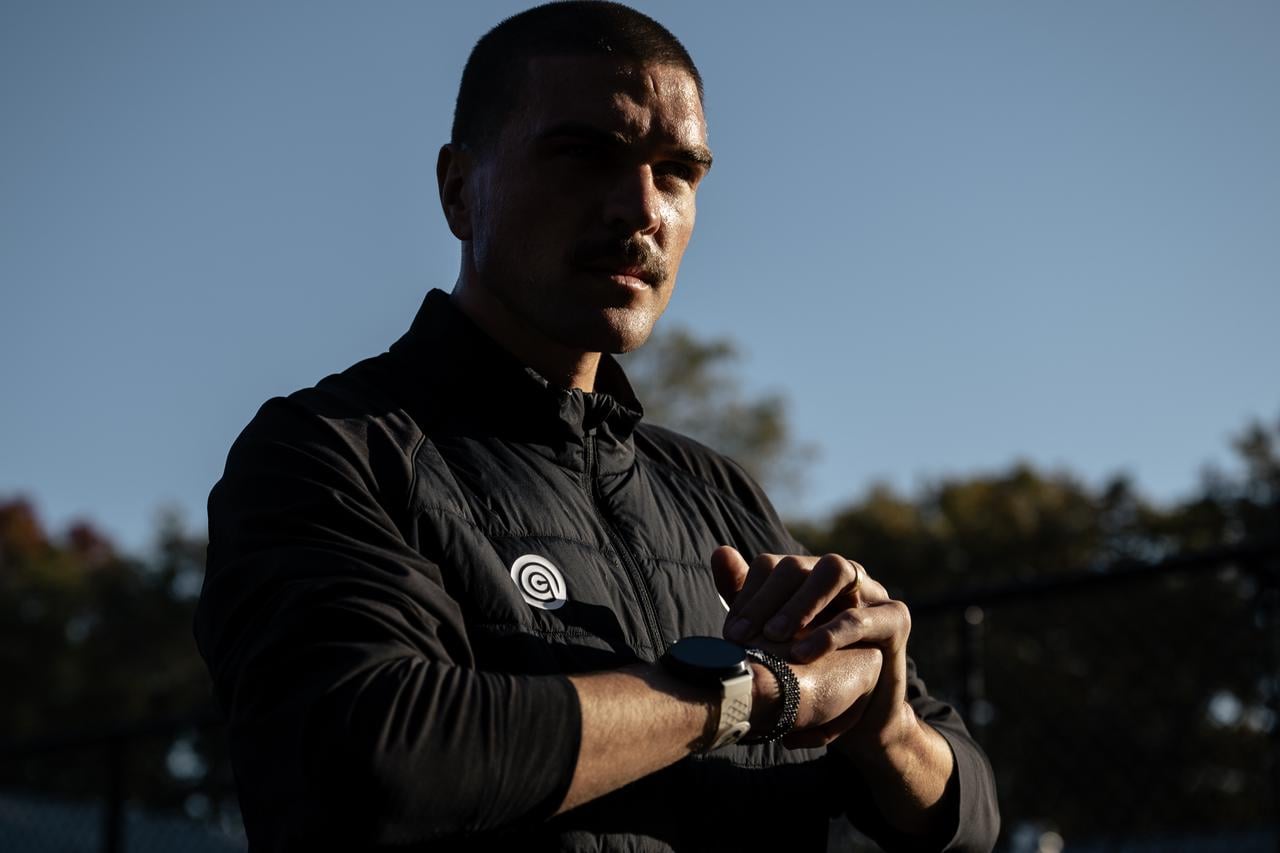
Across his build, Klecker completed four separate 25-mile (40.2 km) long runs.
| Session | Distance | Time | Average Pace | Average HR |
|---|---|---|---|---|
| Long Run 1 | 25 miles | 2:19:29 | 5:35/mi | 147 bpm |
| Long Run 2 | 25 miles | 2:20:03 | 5:36/mi | 152 bpm |
| Long Run 3 | 25 miles | 2:18:46 | 5:33/mi | 153 bpm |
| Long Run 4 | 25 miles | 2:16:32 | 5:27/mi | 152 bpm |
Together, they added up to 100 miles of marathon-specific long running. His final long run was nearly three minutes faster than his first, at an average pace of 5:27/mi.
Even so, Klecker's aim was consistency from one long run to the next, with speed following naturally. He focused on running each session at a controlled effort and finishing with enough in reserve for the next workout.
The lesson: Marathon endurance is built on training you can repeat week after week.
New York: A Year of Progress
Klecker returned to New York one year after his marathon debut on the same course.
| Race | Finish Time |
|---|---|
| 2025 NYC Marathon | 2:10:37 |
| 2026 NYC Marathon | 2:09:28 |
| Improvement | 1 minute 9 seconds |
Finishing 15th overall, he improved his time on New York's demanding five-borough course.
The result was slower than his 2:05:56 in Boston, and it marked another step forward in his development over the distance.
For Klecker, every race is a chance to apply the lessons of training and gain experience against the world's best. His long-term goal remains the U.S. Olympic Marathon Trials, the race his mother, Janis Klecker, won in 1992.
Beyond the Finish Line: Sharing the Journey
Joe Klecker’s journey from the track to the marathon is about more than race-day results.
Throughout his preparation for the 2026 New York City Marathon, Klecker invited the running community behind the scenes, openly sharing his training sessions, weekly progress, recovery, and personal reflections through Suunto and his social channels.
Through his partnership with Suunto, that openness transformed training data into meaningful stories, allowing fans to follow his progress, understand his preparation, and experience the journey alongside him.
His return to New York marked another step forward, but the story extends far beyond the finish line.
The true story of running is never just about race day. It’s about every mile that gets you there.
From track speed to marathon strength. From training data to authentic storytelling. The journey continues.