Training for a road marathon, or want one watch that covers running, cycling and hiking? That question is the best starting point for comparing Suunto Run 2 and Race S.
Run 2 is built for road running and race preparation, with Marathon Mode and EnergySense. Race S takes a broader approach, with more sport modes and longer dual-band GPS battery life. Both watches track your runs and help you review your training, and the right pick depends on how you train and which features you will use.
Short answer: Choose Run 2 for road running and race preparation. Choose Race S for multisport training and longer GPS battery life.
Table of Contents
Suunto Run 2 vs Race S: Key Differences
| Feature | Suunto Run 2 | Suunto Race S |
|---|---|---|
| Display | AMOLED, up to 2,000 nits | AMOLED, up to 600 nits |
| Weight | 35 g watch body; 53 g with strap | 60 g stainless steel / 53 g titanium |
| Dual-band GPS battery life | Up to 24 hours | Up to 30 hours |
| Sport modes | 34+ | 115+ |
| Marathon Mode | Yes | No |
| EnergySense | Yes | No |
| Ghost Runner | Yes | Yes, via SuuntoPlus |
| Offline maps | Yes | Yes |
| Storage | 4GB/64GB | 32GB |
| Offline music | Yes | No |
Suunto Run 2 vs Race S: Running Features
Both watches cover the essentials for tracking runs and reviewing training. Run 2 focuses on road running and race preparation, while Race S offers a wider range of sports and additional training tools.
Suunto Run 2: Road Running and Race Preparation
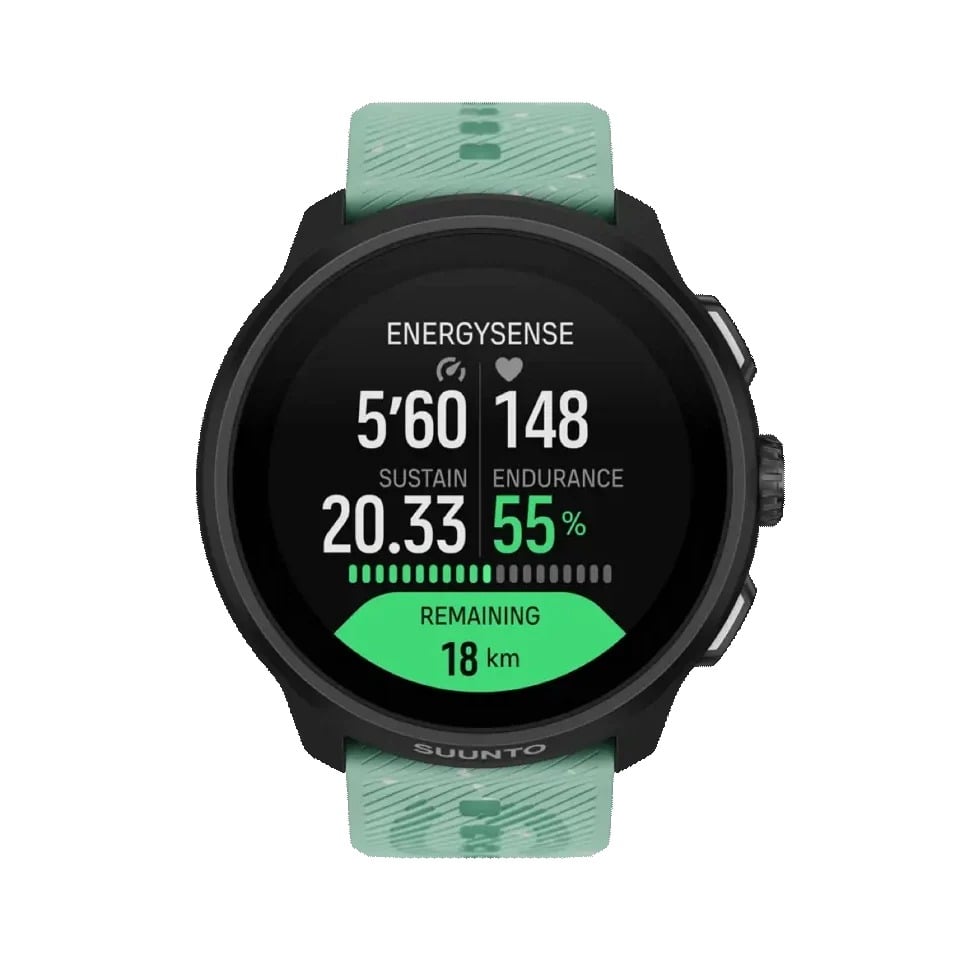
- Marathon Mode: Provides real-time finish-time estimates based on your running pace and displays distance covered and race progress, helping you track your progress toward the finish line.
- EnergySense (Beta): A new feature on Suunto Run 2 that estimates your remaining endurance and how much farther you can run at your current effort. It helps road runners manage their pace during long runs and marathons, giving them a better idea of when to hold back or push harder.
- Running Dynamics: Run 2 has ground contact time and vertical oscillation to the running log summary, giving you more insight into your running form after each workout.
- Ghost Runner: Run 2 comes with a built-in Ghost Runner, letting you compare your pace with a virtual runner during training. Race S also supports Ghost Runner through SuuntoPlus.
Suunto Race S: Multisport and Training Flexibility
- 115+ sport modes: Suits athletes who mix running with cycling, swimming and hiking.
- SuuntoPlus: Adds sport apps and training tools to your watch, including Ghost Runner.
- TrainingPeaks Sync: Both watches connect with TrainingPeaks. Race S also syncs structured training plans to the watch, and this feature is planned for Run 2 in a future software update.
GPS Battery Life: Is Six More Hours Important?
Race S records up to 30 hours with All-Systems GNSS and Multi-Band enabled, compared with up to 24 hours on Run 2.
For everyday runs and most road races, both watches offer plenty of GPS recording time. The extra six hours on Race S matter more for ultramarathons, long days outdoors, or any activity that needs high-accuracy GPS for an extended period.
These are maximum figures under specified conditions. Actual battery life may vary depending on settings, usage and operating conditions. If your activities rarely approach Run 2’s GPS limit, the extra runtime may not decide it for you. If you regularly record long sessions, Race S gives you more headroom.
Offline Maps and Music: What Can Each Watch Do?
Both watches support offline maps, but Run 2 has an additional advantage: offline music playback.
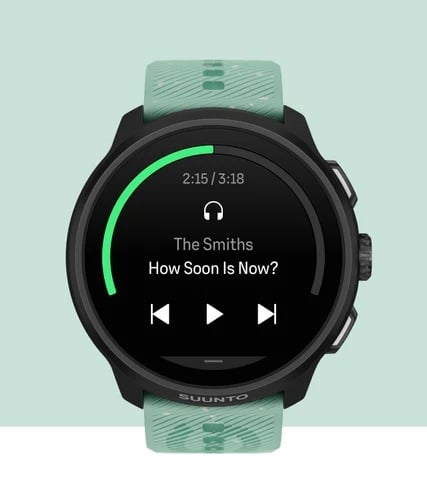
With Run 2, you can store compatible music files on the watch, pair Bluetooth headphones and leave your phone at home. Race S doesn't support offline music playback, but you can still control music playing on your phone.
If you prefer running without carrying your phone, Run 2 offers more flexibility. If you usually bring your phone along, this difference may matter less.
Heart Rate Monitoring
Both watches track heart rate during workouts, helping you monitor training intensity and review your effort over time.
Suunto Run 2 features a 12-channel optical heart rate sensor beneath 2.5D curved glass. This updated sensor design is intended to support heart rate tracking during different types of running, from steady road runs to interval sessions.
Wrist-based heart rate readings can vary with fit and movement. For more detailed heart rate data during structured training, both watches can also pair with compatible external heart rate sensors.
Display and Design: Brightness, Weight and Materials
A Brighter Display on Run 2
Run 2 delivers 2,000 nits of brightness, compared with 600 nits on Race S. That extra headroom makes pace, heart rate and workout data easier to read in strong sunlight.
Outdoor readability depends on more than brightness, and battery use varies with screen settings. If screen visibility is a priority, the specs favor Run 2, and actual battery life still depends on how you use the watch.
Lightweight Design and Materials
Run 2 has a 35 g watch body and weighs approximately 53 g with its strap. Published weights for Race S are 60 g in stainless steel and 53 g in titanium.
Run 2 is built around its 35 g watch body, while titanium Race S is also relatively light. Race S gives you a choice of bezel material, which may appeal if you prefer a different finish.
Weight is personal. If you notice every gram on a long run, Run 2 is worth considering. If material choice matters more, compare Race S versions and their published weights before you decide.
Which Watch Should You Choose?
Choose Suunto Run 2 if:
- Road running and marathon preparation are your main priorities.
- You want our latest Marathon Mode and EnergySense modes.
- A brighter display and lightweight design appeal to you.
- You want offline music playback on your watch.
- Running-focused features matter more to you than a broad range of multisport tools.
Choose Suunto Race S if:
- You regularly switch between running and other sports.
- You want more than 115 sport modes and SuuntoPlus.
- Longer dual-band GPS recording time matters to you.
- You want a choice between stainless steel and titanium versions.
- You want broader multisport training tools.
Bottom Line
Run 2 is the more focused choice for road runners who want race-specific tools in a lightweight watch. Race S suits people who want broader multisport support and longer GPS recording time. Start with your training routine, then choose the features you’ll use most.