Two compact Race watches, one character apart. Suunto Race S arrived in 2024 as the smaller, lighter way into the Race family. Suunto Race 3S is its successor: a new-generation performance watch built for smarter training and trail running, in a case sized for smaller wrists.
Race 3S is the more capable watch. The real question is whether its upgrades change how you train, or whether Race S already covers everything you need.
Here is what changed, what carries over, and how to pick the right compact Race for your wrist.
At a Glance
Suunto Race S: 45 mm case, 53 g in titanium, 1.32-inch AMOLED at 600 nits, and up to 30 hours of dual-band GPS. The lighter, more affordable compact Race.
Suunto Race 3S: 46 mm titanium case with sapphire glass, 56 g with strap, 1.32-inch LTPS Hybrid AMOLED at 2,000 nits, and up to 38 hours of dual-band GPS. The new-generation compact Race, and the watch that debuts Suunto AI Coach.
Biggest Upgrades: A screen over three times brighter, 8 more hours of dual-band GPS, sapphire glass, the Apollo 510 processor, an upgraded heart rate sensor, double the storage, and Suunto AI Coach.
Shared by Both: Free worldwide offline maps, dual-band GPS, Climb Guidance, 5 ATM water resistance, a full range of sport modes, and complete training analysis in the Suunto app.
Rule of Thumb: Choose Race 3S for the brighter screen, longer battery, tougher glass, and AI coaching. Choose Race S to save a few grams and some money.
Table of Contents
- The Short Answer: Which One Fits You?
- Suunto Race 3S vs Race S: Full Comparison
- Display: 2,000 Nits vs 600 Nits
- Battery: Up to 38 Hours of Dual-Band GPS
- Build: Sapphire Glass and a Titanium Case
- Processor: Apollo 510 vs Apollo 4 Plus
- Heart Rate: An Upgraded Optical Sensor
- AI Coach: A Coach That Knows You
- What Both Watches Share
- The Race Takeaway
- FAQ
The Short Answer: Which One Fits You?
Choose Suunto Race S if you:
- want the lighter, more affordable way into a compact Race watch
- run and train at distances that finish well inside 30 hours of GPS
- train mostly in everyday light, where a 600-nit screen reads clearly
- already own Race S and it covers everything you do
Choose Suunto Race 3S if you:
- want a 2,000-nit screen you can read at a glance in full sun, snow glare, or high-altitude light
- go long: big trail days, ultras, or back-to-back sessions between charges
- want Suunto AI Coach building and adapting your training plan
- want sapphire glass, the faster Apollo 510 processor, and an upgraded heart rate sensor
- want 64 GB of storage for maps, routes, and training data
Still weighing it up? The sections below take each difference in turn. And the features you rely on most, free offline maps and dual-band GPS, come with both watches.

Suunto Race 3S vs Race S: Full Comparison
Both watches share their software, their maps, and their core running tools. The gap opens up in six places: display, battery, build, processor, heart rate, and AI Coach.
| Specification | Suunto Race 3S | Suunto Race S |
|---|---|---|
| Case size | 46 x 46 x 11.4 mm | 45 x 45 x 11.4 mm |
| Weight | 56 g with strap | 53 g titanium (60 g stainless steel) |
| Case material | Titanium | Titanium or stainless steel |
| Front glass | Sapphire | Corning Gorilla Glass |
| Water resistance | 5 ATM | 5 ATM |
| Display | 1.32" LTPS Hybrid AMOLED | 1.32" AMOLED |
| Brightness | 2,000 nits | 600 nits |
| Resolution | 466 x 466 | 466 x 466 |
| Processor | Apollo 510 | Apollo 4 Plus |
| Heart rate sensor | 6 LEDs + 4 photodiodes | 4 LEDs + 2 photodiodes |
| GPS | Dual-band (L1 + L5) | Dual-band (L1 + L5) |
| Battery, dual-band GPS | Up to 38 hours | Up to 30 hours |
| Battery, daily use | Up to 12 days | Up to 9 days |
| Storage | 64 GB | 32 GB |
| Offline maps | Free, worldwide | Free, worldwide |
| Colours | Orchid, Feather, Black | All Black, Gravel Gray, Power Blue, Power Orange, Powder Gray, Powder Pink, Titanium Graphite, Titanium Canary, Titanium Courtney, UTMB World Series |
Display: 2,000 Nits vs 600 Nits
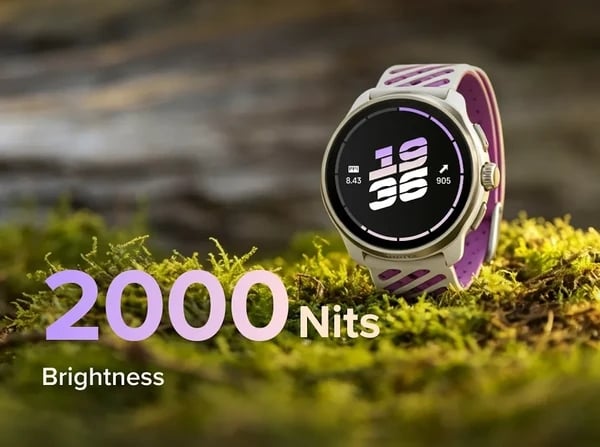
This is the upgrade you notice first, and the one that matters most when the light turns harsh. Both watches use a crisp 1.32-inch AMOLED panel at 466 x 466, so text and maps look sharp on either wrist.
The difference is brightness. Race 3S delivers 2,000 nits, more than three times the 600 nits of Race S. On an exposed ridge at midday, across a snowfield, or under a hard noon sun, that is the gap between squinting at your pace and reading it mid-stride.
Race S stays clear in everyday conditions. Race 3S stays readable in the harshest light you train in.
Battery: Up to 38 Hours of Dual-Band GPS
For long-distance athletes, this can settle it. In its most accurate dual-band GPS mode, Race 3S runs for up to 38 hours, against up to 30 hours on Race S. That is 8 more hours of full-accuracy tracking, right where you need them: deep into a long mountain day.
In daily use, Race 3S lasts up to 12 days between charges, against up to 9 on Race S. Both watches offer further battery modes for longer, lower-power tracking.
The short version: if your longest efforts finish comfortably inside 30 hours, Race S has you covered. If you are training for ultras, stacking back-to-back big days, or simply want to charge less often, Race 3S gives you the headroom.
Build: Sapphire Glass and a Titanium Case
Both watches are built to train and race in any weather, with 5 ATM water resistance for swims, rain, and river crossings.
Race 3S steps up the materials. Its titanium case is topped with sapphire glass, where Race S uses Corning Gorilla Glass. Sapphire is exceptionally scratch-resistant, so if your watch trades knocks with rock, scree, and trekking poles, the screen stays clear for longer.
Race 3S weighs 56 g with strap, a few grams more than Race S in titanium at 53 g. Both are compact watches that sit comfortably on smaller wrists.
Processor: Apollo 510 vs Apollo 4 Plus
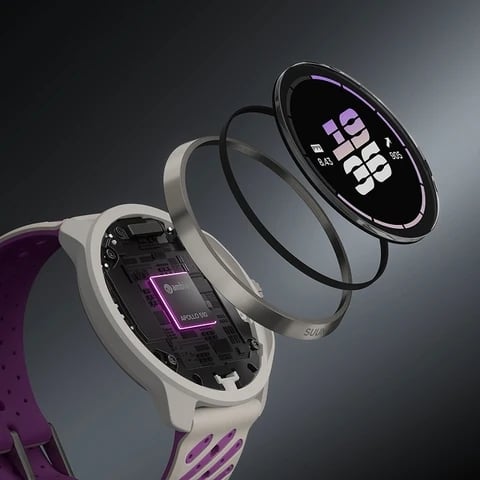
Race 3S runs on the new-generation Apollo 510 processor, a step up from the Apollo 4 Plus inside Race S. You feel it every time you swipe through screens, load a map, or start a workout: the watch responds faster and keeps pace while you move.
It is not the spec you will talk about. It is the one you will appreciate in every session.
Heart Rate: An Upgraded Optical Sensor
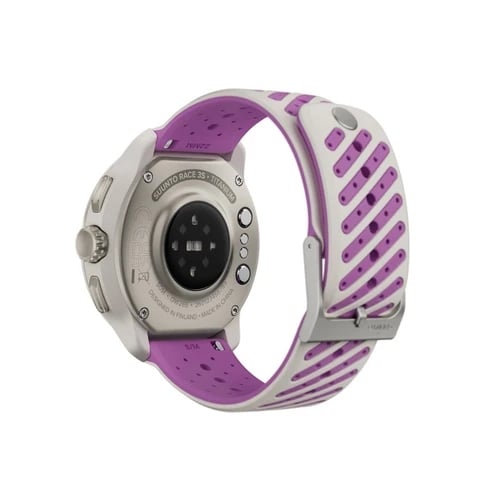
Race 3S carries an upgraded optical heart rate sensor with six LEDs and four photodiodes, against four LEDs and two photodiodes on Race S. More sensors mean a stronger signal, and that pays off exactly when wrist heart rate is hardest to read: intervals, tempo efforts, and the closing kilometres of a long run. Both watches also pair with a heart rate belt for chest-strap precision.
If wrist heart rate has let you down on hard sessions, this is a strong point in favour of Race 3S.
AI Coach: A Coach That Knows You
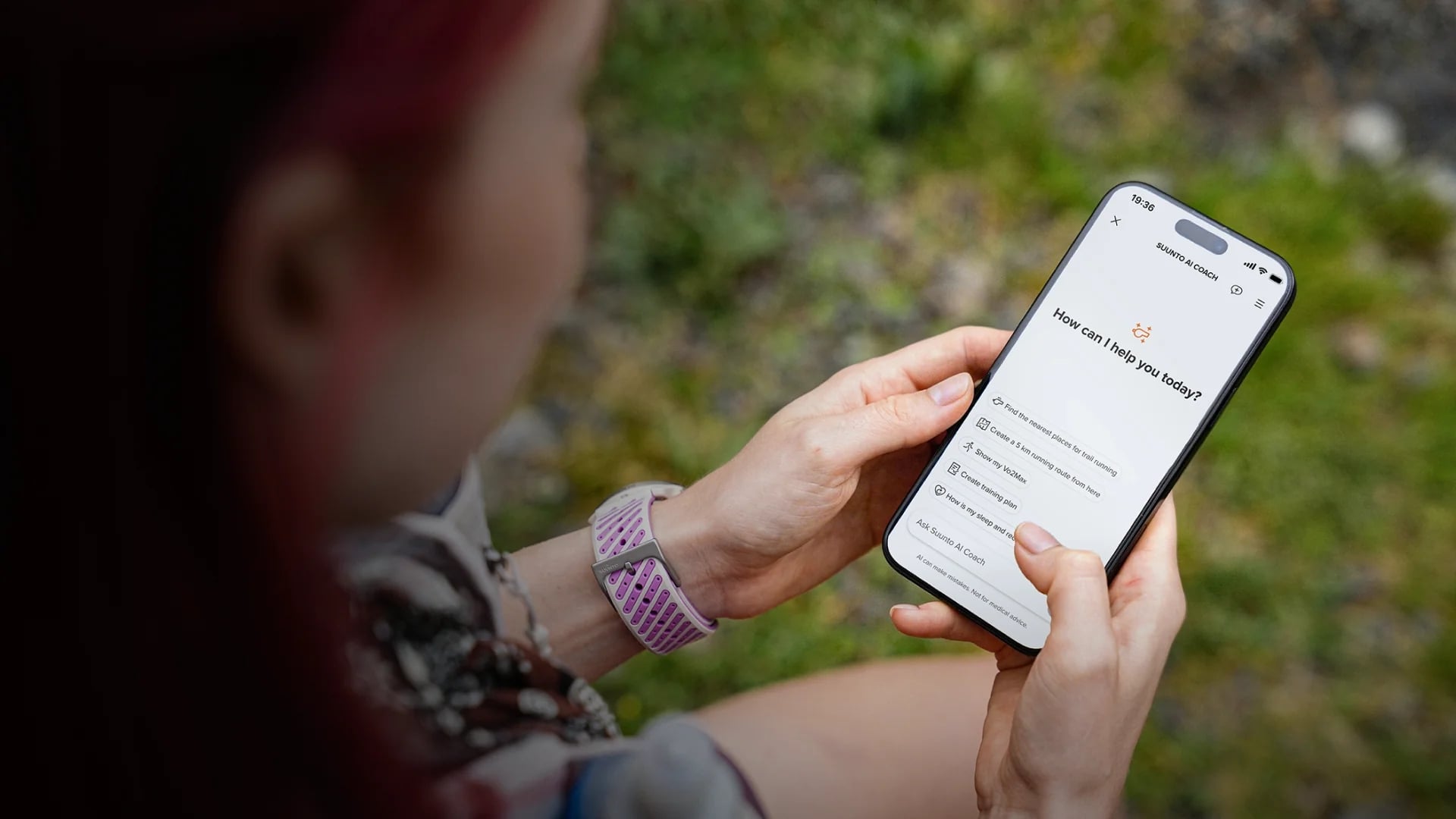
The most valuable upgrade on Race 3S is software. Race 3S debuts Suunto AI Coach, Suunto's new-generation coaching experience in the Suunto app.
It builds a personalised training plan around your goals, adapts it as your fitness and recovery change, and answers your training questions in plain language. Pair Race 3S with a heart rate belt and ZoneSense reads your true intensity, so your easy days stay easy and your hard days count.
Every Race 3S bought before the end of 2026 includes three months of Suunto AI Coach.
What Both Watches Share
Whichever you choose, you get the full Suunto Race experience. Both watches include:
- Free worldwide offline maps for confident navigation off-grid
- Dual-band GPS for accurate tracking in cities, forests, and mountains
- Climb Guidance and turn-by-turn navigation
- 5 ATM water resistance
- A full range of sport modes covering running, trail, cycling, swimming, and more
- Race tools including race pacing and finish-time estimates
- Around-the-clock heart rate, sleep, HRV, and recovery tracking
- Complete training analysis, free in the Suunto app
Same maps, same metrics, same analysis. The choice comes down to hardware and the newest coaching.
The Race Takeaway
Race 3S and Race S share the same software, the same free offline maps, and the same compact fit. What sets Race 3S apart is everything new: a 2,000-nit screen you can read in any light, up to 38 hours of dual-band GPS, sapphire glass, the Apollo 510 processor, an upgraded heart rate sensor, and Suunto AI Coach. If those upgrades match how you train, Race 3S is the clear pick. If not, Race S still delivers the core Race experience at a lighter weight and a lower price. Either way, you are wearing a real Race watch.
Explore Suunto Race 3S, the new-generation compact watch from Suunto.
FAQ
Is Race 3S a Replacement for Race S?
Race 3S is the new-generation compact Race and the successor to Race S. It keeps a case sized for smaller wrists and adds a far brighter screen, longer dual-band battery, sapphire glass, a faster processor, an upgraded heart rate sensor, and Suunto AI Coach. Race S remains a strong choice if you want the lighter, more affordable compact Race.
What Is the Biggest Difference Between Race 3S and Race S?
Screen and battery. Race 3S delivers 2,000 nits, over three times brighter than the 600 nits on Race S, and runs up to 38 hours of dual-band GPS against 30. On the software side, Race 3S debuts Suunto AI Coach.
How Does Race 3S Compare With Race S on Weight?
Race 3S weighs 56 g with strap, a few grams more than Race S in titanium at 53 g. Those grams bring a brighter screen, longer battery life, and sapphire glass, and both watches stay compact and comfortable on smaller wrists.
Are Race 3S and Race S Water Resistant?
Yes. Both are water resistant to 5 ATM, ready for swims, rain, and river crossings.
Does Race 3S Have Offline Maps Like Race S?
Yes. Both include free worldwide offline maps and dual-band GPS for confident navigation far from phone signal. Race 3S doubles the storage to 64 GB, leaving more room for maps, routes, and training data.
Which Should I Buy, Race 3S or Race S?
Choose Race 3S if you train long or in harsh light and want the brightest screen, the longest dual-band battery, and Suunto AI Coach. Choose Race S if you want the lighter, more affordable compact Race and it already covers your training.